




Course Speakers

Curriculum
Watch free lectures
Create a free account or log in to access free lectures for this course.
No payment required.
Create free account Log inChapter 1
Free lectures
3 lessons
Lectures & Quizzes:
 Epidemiology and natural history (00:08)
Overview (00:05)
Structural MR - Segmental Anatomy (00:07)
Epidemiology and natural history (00:08)
Overview (00:05)
Structural MR - Segmental Anatomy (00:07)
Chapter 2
0.75 CME
Principles of MR
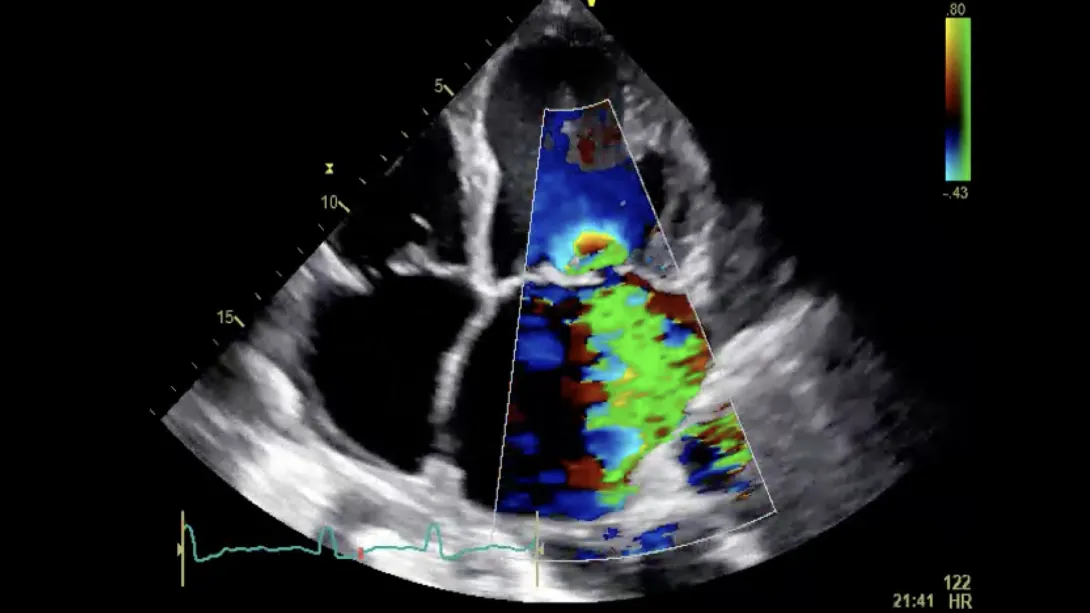
This chapter gives an overview of the epidemiology of mitral valve pathologies and introduces the anatomy and hemodynamic functioning of the mitral valve. It also covers the practical aspect of how to image the MV and the subvalvular apparatus using apical, parasternal, and subcostal echocardiographic views.
6 lessons and 1 quiz
Lectures & Quizzes:
 Epidemiology and natural history (00:08)
Hemodynamics (00:12)
Mitral Valve Anatomy (00:06)
Imaging the Mitral Valve - Apical Views (00:08)
Imaging the Mitral Valve - Parasternal Views (00:08)
Imaging the Mitral Valve - Subvalvular Apparatus (00:06)
Mitral Regurgitation - Principles Quiz
Epidemiology and natural history (00:08)
Hemodynamics (00:12)
Mitral Valve Anatomy (00:06)
Imaging the Mitral Valve - Apical Views (00:08)
Imaging the Mitral Valve - Parasternal Views (00:08)
Imaging the Mitral Valve - Subvalvular Apparatus (00:06)
Mitral Regurgitation - Principles Quiz
Chapter 3
0.75 CME
Causes of MR
This chapter discusses the causes of mitral regurgitation, including primary structural abnormalities (prolapse, flail leaflet, annular disjunction, rheumatic or infectious disease) and secondary causes (functional MR, new entity: atrial functional MR).
9 lessons and 1 quiz
Lectures & Quizzes:
Overview (00:05)
Mitral Valve Prolapse (00:10)
Segmental Mitral Valve Prolpase (00:05)
Mitral Annular Disjunction (00:08)
Flail Leaflet (00:14)
Rheumatic Heart Disease and Endocarditis (00:12)
Rare Causes (00:11)
Secondary (Functional) MR (00:10)
Atrial Functional MR (00:06)
Mitral Regurgitation - Causes of MR Quiz
Chapter 4
0.75 CME
Quantification of MR
This chapter outlines the key methods for assessing mitral regurgitation severity, covering three main approaches: qualitative, semiquantitative methods, and quantitative methods (such as the PISA method).
4 lessons and 1 quiz
Lectures & Quizzes:
Qualitative Assessment (00:17)
Semiquantitative Assessment (00:16)
Quantitative Assessment (00:07)
The PISA Method (00:12)
Mitral Regurgitation - Quantification Quiz
Chapter 5
0.5 CME
Mechanism of MR
This chapter explains how to identify the mechanisms of mitral regurgitation. Beginning with a solid understanding of segmental anatomy and the integration of color Doppler interpretation, you will learn how to recognize the underlying mechanisms. Special focus is placed on commissural prolapse and perforation. The distinction between structural and functional MR is clearly explained and illustrated. A complete patient examination provides hands-on tips for your clinical practice.
5 lessons and 1 quiz
Lectures & Quizzes:
Structural MR - Segmental Anatomy (00:07)
Structural MR - Color Doppler (00:14)
Commissural Prolapse and Perforation (00:06)
Complete Assessment (00:06)
Mechanism Mitral - functional MR (00:05)
Mitral Regurgitation - Mechanism of MR Quiz
Chapter 6
0.5 CME
MR in Mutlivalvular HD
This chapter explores mitral regurgitation in the context of multivalvular heart disease, examining its interaction with mitral stenosis, aortic stenosis, aortic regurgitation, and tricuspid regurgitation, and discussing the resulting hemodynamic and functional consequences.
4 lessons and 1 quiz
Lectures & Quizzes:
MR and MS (00:04)
MR and AS (00:05)
MR and AR (00:05)
MR and TR (00:04)
Mitral Regurgitation - MR and Multivalvular Heart Disease Quiz
Chapter 7
0.75 CME
Management and Future of MR
This chapter covers the differences in how to manage patients with mitral regurgitation depending on its causes, types, and severity. In addition, the role of symptoms, strain imaging, and stress echocardiography is discussed. Finally, the key parameters and recommended intervals for follow-up in these patients are reviewed.
4 lessons and 1 quiz
Lectures & Quizzes:
Structural MR (00:07)
Functional MR (00:08)
Specific Topics (00:09)
Follow Up (00:02)
Mitral Regurgitation - Management Quiz
Objectives

Understand the and pathomechanism of mitral regurgitation and accurately assess its severity using echocardiographic techniques
Determine the appropriate timing and criteria for valve surgery based on patient-specific factors
Master practical imaging skills, including the identification of mitral valve segments and origin detection of regurgitant jets
Ideal for:
 Cardiologists
 Critical Care Physicians
 Sonographers
Internists
Sonographers
Internists
 Anaesthetists
Recommended Courses

The Echo MasterClass is the most comprehensive premium online course in echocardiography,…
The Echo BachelorClass provides an invaluable foundation for the practice of echocardiography…
Mastering Echocardiography with Ultrasound Demonstrations, Case Studies, and Practical Tips
…
Designed to provide in-depth understanding and practical insights, this course is essential for…
The Aortic Valve Disease FocusClass offers a comprehensive overview of diagnosing and managing…

In this course you will learn how echocardiography can support you in recognizing different…

Coronary artery disease is one of the most common indications for echocardiography…

Student Discount
Are you a student? Get 50% discount on this course by completing the student application form.
Get Student DiscountPricing

Half-Year Access
Our shortest option for very fast learners. Ideal for people who have plenty of time to learn.
You get:
- 6 months access to our course
- Ability to complete quizzes and earn CME credits
One-Year Access
Our most recommended access duration to dive deep into the course. Save 30% on the 6-month option.
You get:
- 12 months access to our course
- Ability to complete quizzes and earn CME credits
Two-Year Access
If you want to take your time learning, this option is perfect for you. Save 40% on the 6-month option.
You get:
- 24 months access to our course
- Ability to complete quizzes and earn CME credits